Before you go - more games!
Install TypingMaster's TypingMagic from Microsoft Store to unlock more games, guided practice, and typing tests.
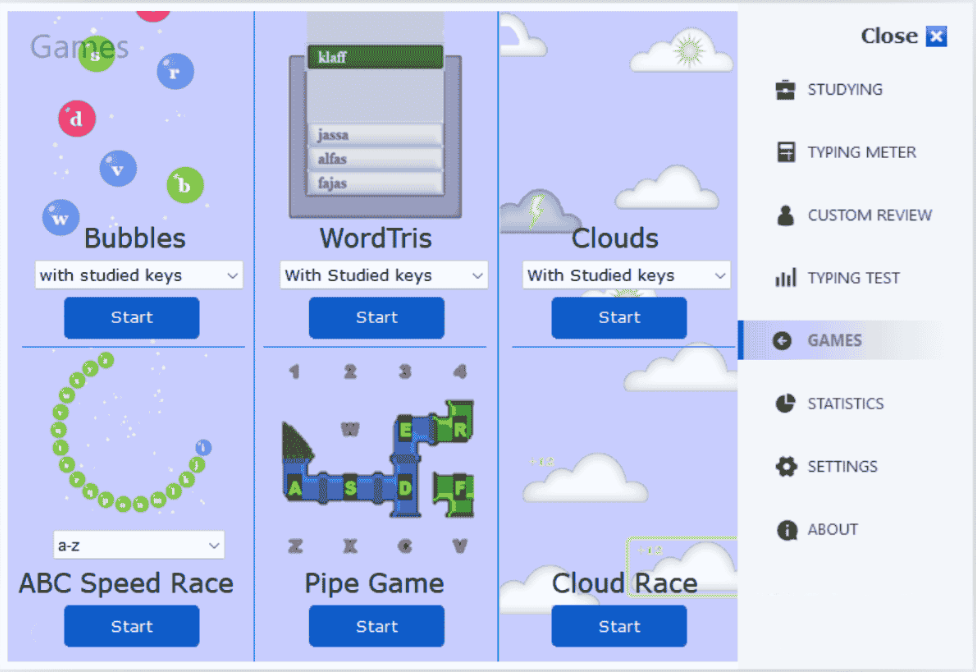
Install from Microsoft StorePress the letters as they float up in bubbles! Type faster to increase the difficulty. Don't let 6 bubbles reach the surface! The game starts with the home row keys to build a solid typing foundation.
Start by choosing a topic that actually solves a problem or answers a question your audience has. Your headline is your first (and sometimes only) chance to grab attention. Use strong words, numbers, or a question to make it clickable. 2. Build a Skeletal Outline Don't just start typing. An outline keeps you on track and ensures you don't miss key points. A solid, simple structure usually looks like this: Introduction: Hook the reader with a relatable problem or surprising stat. Subheadings (H2s/H3s): Break your main topic into 3–5 core points. Conclusion: Summarize your main takeaway. Call-to-Action (CTA): Tell the reader exactly what to do next (e.g., "Leave a comment," "Sign up for our newsletter"). 3. Write Your First Draft (Fast) The goal of the first draft is just to get the ideas down. Don't worry about perfect grammar yet. Focus on sharing your unique perspective or technical depth to make the post substantial. If you're stuck, you can even use AI tools to generate a "Review Draft" that you can then refine. 4. Optimize and Format for Readability
df6org — A Practical Feature Profile df6org is an emerging nonprofit collective focused on building resilient, privacy-respecting digital infrastructure for community-driven projects. This feature summarizes what df6org does, why it matters, and—critically—how individuals and organizations can engage with or adopt its tools and practices. What df6org is
Mission: create and maintain open-source infrastructure that helps community groups, local organizations, and small projects operate secure, censorship-resistant, and privacy-forward digital services. Focus areas: decentralized hosting, privacy-by-design tooling, federated identity and messaging, and capacity-building for community tech maintainers. Approach: combine lightweight technical stacks, thorough documentation, and training to lower the barrier for local groups to run their own services.
Why it matters
Reduces dependence on big cloud providers and single points of failure. Improves privacy and autonomy for small groups that lack in-house engineering. Lowers long-term costs by using minimally resource-intensive, maintainable systems. Strengthens local resilience against censorship, outages, or vendor policy changes.
Core components and tools
Minimal federated server templates: preconfigured, secure deployments for email, Matrix/Matrix-like messaging, and ActivityPub-compatible social servers. Encrypted backup and sync patterns: simple, scriptable workflows to back up configuration and data to encrypted storage (local or low-cost object storage). Lightweight orchestration: Docker-compose or small Nomad/Ansible recipes designed for low-resource VPSes and community-run hardware. Identity and access patterns: privacy-respecting federated identity flows and short-lived keys, with clear guidance for guest/volunteer management. Documentation hub: step-by-step deployment guides, threat models, and incident-recovery playbooks written for non-expert maintainers. Training and mentorship: workshops and office-hours model to help groups get on-boarded and maintain long-term operations. df6org
Typical use cases
A neighborhood mutual-aid group hosting private coordination chat and document storage. Local newsrooms or independent journalists running federated publishing and secure mail servers. Schools or co-ops establishing internal messaging and shared resources without vendor lock-in. Cultural organizations preserving archives on community-controlled infrastructure.
Practical adoption steps (for an organization) Start by choosing a topic that actually solves
Decide scope and critical services
Choose 1–3 initial services (e.g., secure email + private group chat).